








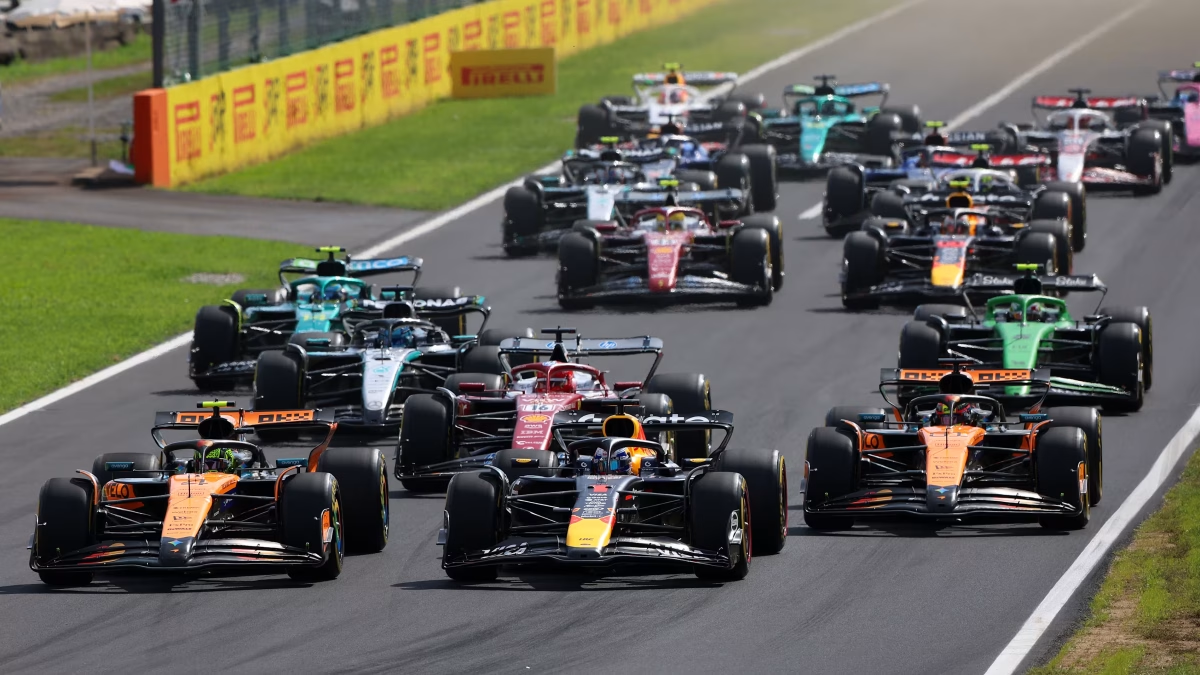












Formula 1 is an intense sport. With gruelling corners, temperatures, strategies, and G forces being an intense challenge on the drivers’ mental toughness, physical endurance, and skills. Formula 1 is easily the top motorsport that kingpins over them all.
But, is that really the case with the new 2026 regulations?
Formula 1 is roughly 2 races into the season, and after China, it’s not looking very good for some of the drivers.
First of all, regulations are very important.
The regulations for the Formula 1 2026 season offer a car that’s narrower, less aerodynamic, shorter, and more complex, yet comfortable when it comes to set-ups and driver aids.
Instead of DRS, they now have a new ‘X-Mode’ used for overtaking and less drag on the straights, whilst also having a ‘Z-Mode’, used for high downforce corners like maggots and beckets from Silverstone. They also added a new ‘overtake’ mode used for overtaking on straights, giving the drivers an extra power boost from the battery, giving more straight-line speed.
They also have a 50/50 power band ratio, making 50% of the power come from the ECU and MGU-K battery, and the other 50% come from the 1.6 litre V6 engine that now uses 100 percent sustainable fuel.
Another key point is the aerodynamic package that the cars now have. They now carry a more slim, narrower, and shorter wheelbase that’s shorter by 200mm and overall car width being 100mm shorter, making them lighter by about 30 Kilogrames, giving the cars more agility through corners; in theory.
These sound great. Making them lighter, quicker, and more sustainable for the environment while also being quicker; in theory, this should be great! Right?
Unfortunately, this just isn’t the case, and the terrifying truth really reveals how awful these cars can truly be.
If you were to look at any onboard footage from any recent F1 races or practice sessions, especially at the pre-race of the 2026 season at Bahrain, you can see drivers like Issak Hadjar struggle intensely because of the power ratio between the engine and battery.
As an example, let’s look at the 2025 regulations a little bit.
The 2025 Formula 1 season’s engine regulations were a 70/30 ratio, making the engine more powerful than the battery, which is shown to be better for overall pace and speed through each of the races.
Now, the reason this is mentioned is due to the fact that each of the cars has such a hard time with overtaking on straights because they are just too slow. They run out of battery too quickly, and it makes the power band extremely slow and tedious to manage. As soon as the battery runs out, you have 50% power out of the whole car, making it have similar horsepower numbers to a GT3 or GTE racing car, which is awful if it’s thought about. GT3 and GTE cars are based on genuine road cars turned into racing cars; Formula One cars are track demons made by people who love expensive projects.
It really just sucks to think about it when it comes down to it. The arguably best and fastest sport is becoming slower because of regulations that not a lot of people really asked for. If the FIA had kept the engine from 2022 to 2025, the cars would be much more manageable and less annoying to overtake, because there wouldn’t be a 50/50 power ratio, just 70/30, which is a lot better for racing overall. After all, the engine has more power than the battery, which is only supposed to aid the driver in racing faster.
Overall, the sport could fizzle out or become boring after a while if the teams didn’t have anything too interesting going on with their cars, making the sport extremely unenjoyable sometimes.
If they were to tweak the engine and power band, make the cars’ internal components similar to the previous regulations or older regulations, the cars would be a lot better for racing, speed, glory, and be less underwhelming for the drivers; this is the top sport after all. So why make it slow?